
Threat & Exposure
Threat Intelligence
Contextual, timely intelligence your team can act on the same day it arrives.
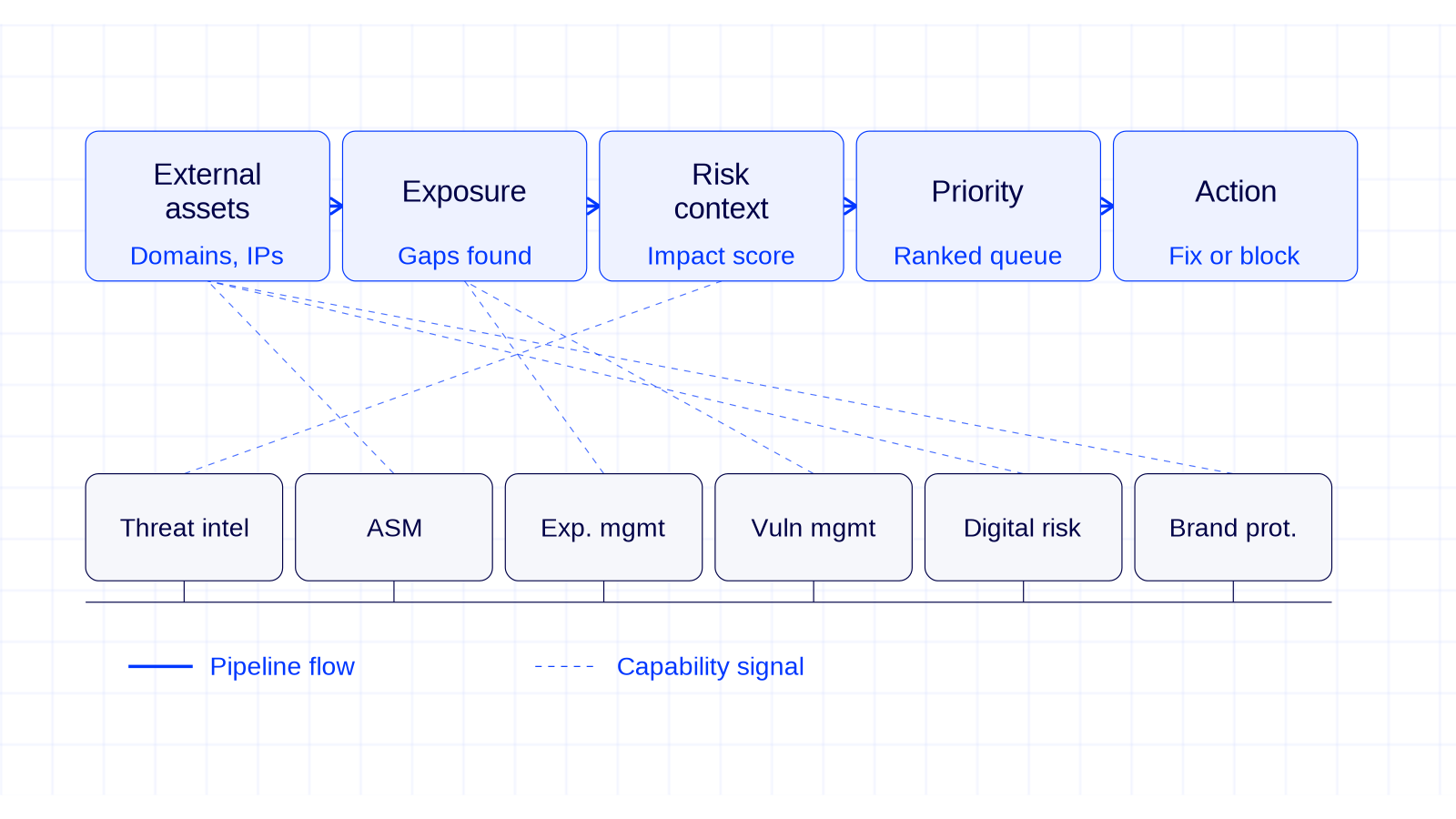
Where this risk comes from
Most security teams have more threat data than they can use and not enough that's actually relevant to them. Generic feeds full of indicators with no context create noise, not decisions.
Mellivor Threat Intelligence focuses on what's relevant to your industry, geography, and technology stack, and delivers it in a form your team can act on the same day.
What enterprises are up against
- Threat feeds full of indicators with no relevance to your environment
- No clear link between intelligence and the controls that should act on it
- Limited visibility into threat actors specifically targeting your industry
- Intelligence arriving too late to change the outcome of an active incident
What's actually at stake
Defending against threats you can't see coming is a losing position. Organizations with contextual, timely intelligence consistently detect and contain incidents faster than those relying on generic indicator feeds.
Attribution and context also change the response: a targeted campaign against your sector deserves a different posture than opportunistic scanning noise.
The Mellivor approach
- Curated intelligence scoped to your industry, geography, and technology footprint
- Direct feed into Behind24 detection rules and SOAR playbooks
- Regular briefings translating raw intelligence into operational guidance
- Dark web and closed-source monitoring for targeted chatter
Technology categories that support this solution
Detection & Response
SIEM, XDR, and threat detection technologies integrated into Behind24.
Network & Perimeter
Firewalls, network detection, and perimeter defense technologies.
Attack Surface Management (ASM)
External attack surface discovery, monitoring, and exposure assessment technologies.
Go deeper
Mellivor's platform is backed by teams who design, deploy, and run it alongside you.
Cyber threat intelligence, answered
What is cyber threat intelligence (CTI)?
Cyber threat intelligence is analyzed information about the attackers, tools and campaigns that threaten your organization. Unlike raw data or indicator feeds, it adds context: who is behind an attack, how they operate and what it means for you.
What is the difference between a threat feed and threat intelligence?
A feed is a stream of indicators such as IP addresses and file hashes. Intelligence is the analysis on top: which threats are relevant to your sector and systems, and what to do about them. Feeds feed tools, intelligence supports decisions.
What are the types of threat intelligence?
Strategic intelligence informs executives about trends and risk. Operational intelligence covers specific campaigns and attacker behavior. Tactical intelligence describes techniques and procedures. Technical intelligence provides indicators your tools can use directly.
What does dark web monitoring find?
It looks for your organization's data where attackers trade it: leaked credentials, stolen databases, access offered for sale and mentions of your brand or executives. Early warning gives you time to reset access before it is abused.
Who needs threat intelligence?
Any organization with systems attackers would want to reach. It matters most for enterprises in regulated or frequently targeted sectors such as finance, energy, retail and technology.
See Threat Intelligence in action
Request a demo scoped to this solution and your environment.
Request Demo